Magic as Physics and Code: Why Hard Magic Systems Make the Ultimate 20+ Hour Fantasy Audiobooks
Published on 2026-11-09 by The Long Book Club
Why do fantasy audiobook fans happily commit 30, 40, or 50 hours to worlds governed by thermodynamics, light refraction, and reality coding? Explore the great divide between soft wonder and hard mechanics—and why rule-bound fantasy turns long-form audio into the ultimate game of acoustic chess.
When Gandalf the Grey stands upon the narrow bridge of Khazad-dûm, slamming his staff into the stone and roaring *"You cannot pass!"*, readers are not expected to calculate the acoustic frequency of his incantation, the tensile limits of his Glamdring blade, or the caloric toll of repelling a Balrog. Tolkien’s magic is ancient, biblical, and poetic. It functions like the weather or divine providence—a force of terrifying awe that lurks in the shadows of the world, never to be pinned down by an equation.
Now contrast that moment with Vis Telimus in James Islington’s 28-hour Roman-inspired epic The Will of the Many. Trapped in an aquatic labyrinth trial beneath the Catenan Academy, Vis cannot simply mutter an ancient vowel to banish his pursuers. Every burst of superhuman speed, every shield against crushing pressure, and every lethal stroke of kinetic force is strictly governed by the Catenan Hierarchy: a mathematical, pyramidal social battery where millions of lower-caste citizens cede their strength, vision, and mental acuity upward to patrician magistrates. Power is not an abstract mystery; it is physical human labor, measured in units of ceded Will, and running out of fuel means immediate, agonizing death.
Or watch Gavin Guile in Brent Weeks’s 21-hour masterpiece The Black Prism. When Gavin summons magic, he is not whispering to spirits; he is converting visible light through the lenses of his eyes into luxin—a physical chemical substance with exact boiling points, densities, structural fragilities, and toxic psychological feedback loops. Blue luxin is rigid and brittle; red is sticky and flammable; green is flexible; superviolet is razor-thin and invisible. If he drafts too much light in his lifetime, he stains the whites of his eyes and slides into violent madness.
Between these two extremes lies the most passionately debated divide in modern fantasy literature: Soft Magic versus Hard Magic.
For decades, literary purists argued that explaining the plumbing of magic ruins the mystery of fantasy. They warned that reducing the supernatural to physics and code would turn grand heroic epics into tedious board game manuals.
Yet across the global audiobook community, something extraordinary has happened over the past decade: the longer, denser, and more mathematically rigorous a magic system is, the more fanatically listeners devour it.
Why do audio enthusiasts happily commit 20, 30, or even 50 marathon hours to fantasy epics governed by thermodynamics, light refraction, and reality coding? And why does rule-bound fantasy achieve a level of dramatic tension in your headphones that print can rarely match?
To understand this phenomenon, we have to look at the psychology of listening—and how master narrators turn arcane mechanics into the ultimate game of acoustic chess.
---
## 1. The Great Divide: The Staff vs. The Spreadsheet
To appreciate why hard magic systems have conquered long-form audio, we must first understand the philosophical schism that split the fantasy genre in two:
* The Soft Magic Paradigm *(Tolkien, Martin, Le Guin)* * Primary Focus: Awe, cosmic wonder, and mythological terror. * Underlying Rules: Hidden, poetic, and instinctive—never pinned down by equations. * The Cost: Mystical, emotional, and psychological toll. * Conflict Resolution: Willpower, destiny, character sacrifice, and divine intervention. * Genre Benchmarks: J.R.R. Tolkien (*The Lord of the Rings*), George R.R. Martin (*A Song of Ice and Fire*), Ursula K. Le Guin (*Earthsea*). * The Hard Magic Paradigm *(Sanderson, Weeks, Islington, Rowe)* * Primary Focus: High-stakes tactical tension, protagonist agency, and fair-play logic. * Underlying Rules: Explicit, measurable, and strictly codified like physical laws. * The Cost: Thermodynamic, biological, caloric, or sociological depletion. * Conflict Resolution: Analytical wits, strategic resource management, and creative exploitation of rules. * Genre Benchmarks: Brandon Sanderson (*The Stormlight Archive*), Brent Weeks (*Lightbringer*), James Islington (*The Hierarchy*), Andrew Rowe (*Arcane Ascension*).
### The Poetry of the Unknown (Soft Magic) In classic high fantasy—from J.R.R. Tolkien’s *The Lord of the Rings* and Ursula K. Le Guin’s *Earthsea* to George R.R. Martin’s *A Song of Ice and Fire*—magic is deliberately atmospheric. We rarely understand the exact mechanics of Melisandre’s shadow assassins or the precise energetic exchange required to resurrect Jon Snow.
Soft magic is magnificent for evoking the sublime. It reminds us that the universe is vast, uncaring, and populated by powers older than mortal cognition. But soft magic carries a massive narrative limitation, famously diagnosed by Brandon Sanderson:
> Sanderson’s First Law of Magic: > *"An author’s ability to solve problems with magic in a satisfying way is directly proportional to how well the reader understands said magic."*
If an author has never explained the rules, boundaries, and costs of a magical ability, having the protagonist suddenly unleash a brand-new spell to disintegrate the villain at the climax feels cheap. It is a *deus ex machina*—a magician pulling a rabbit out of an invisible hat. As a result, classic soft-magic protagonists rarely rely on magic to resolve their climaxes; Frodo carries a sword and uses stealth; Aragorn leads soldiers; Jon Snow fights with cold steel.
### The Engineering of the Arcane (Hard Magic) Hard magic systems flip this equation upside down. Authors like Brandon Sanderson (The Way of Kings), Brent Weeks (The Black Prism), Patrick Rothfuss (The Name of the Wind), and Robert Jackson Bennett (Foundryside) treat magic like an undiscovered branch of physics or computer engineering.
The fundamental law governing all hard magic is The Conservation of Energy: 1. Defined Limitations: What can magic *not* do? (e.g., In Rothfuss's Sympathy, energy cannot be created from nothing; every joule of heat transferred into a coin must be drawn from an open fire, a candle, or your own body heat). 2. Explicit Costs: What does the caster sacrifice? (e.g., In Islington's Hierarchy, exercising Will consumes human lifespan and health; in Sanderson's Mistborn: The Final Empire, burning pewter requires digesting physical metal beads that deplete under heavy exertion). 3. Rigid Penalties for Overuse: Pushing beyond your threshold doesn't trigger vague exhaustion; it causes specific, catastrophic failures—*binder’s chills* that freeze your heart, broken halos that shatter your sanity, or ruptured muscles.
When the audience knows the exact rules, fuel levels, and limitations of a system, magic stops being an unpredictable spectacle and becomes a tactical chessboard.
---
## 2. The Audiobook Paradox: Why Rules Thrill in Headphones
Here lies the great paradox of the fantasy genre: on the printed page, hard magic systems can occasionally feel dry or over-engineered.
Every veteran print reader has experienced the "textbook trap"—glancing at an eight-page appendix detailing metallurgical burn rates or luxin spectrum charts and feeling like they are cramming for a freshman chemistry exam. When reading with the eyes, heavy mechanical exposition can interrupt the emotional flow of the prose.
In an unabridged audiobook, the dynamic completely reverses.
When performed by an elite vocal artist, mechanical exposition sheds its dry academic skin and transforms into hypnotic, atmospheric worldbuilding. There are three key reasons why long-form audio is the ultimate medium for rule-bound fantasy:
### 1. Acoustic Sensory Cues A great narrator does not simply recite magical rules; they give those rules an acoustic signature. * When Michael Kramer narrates The Way of Kings, the ingestion and burning of metals in *Mistborn* or the consumption of Stormlight is accompanied by breathless, gravelly vocal tension that makes the listener feel the raw pressure building behind the character's ribcage. * When Simon Vance narrates The Black Prism, he modulates his tone to reflect the emotional distortion of every luxin color: snappy, clinical intellect for blue; manic, blood-pumping fury for red; warm, languid relaxation for green. The mechanics become palpable auditory textures. * When Tara Sands narrates Foundryside, her rapid-fire, streetwise cadence turns the complex logical commands etched into inanimate objects into a high-stakes, breathless cybersecurity hack.
### 2. The Runway of Duration A ten-hour novel does not have the narrative real estate to teach an audience a complex, multi-tiered magic system, test its boundaries under pressure, and then construct an intricate intellectual puzzle around it. It feels rushed.
A 25-to-50-hour marathon audiobook, however, possesses the exact canvas hard magic requires: * Hours 1–10 (The Baseline): The listener internalizes the fundamental rules alongside the apprentice protagonist. You learn what happens when energy slips, how metals burn, or how Will transfers. * Hours 11–25 (The Complications): The author introduces tactical permutations, rival specialists, and environmental constraints (e.g., fighting inside an anti-magic perimeter or running out of sunlight). * Hours 26–40+ (The Payoff): The climax tests the system to its absolute breaking point, allowing the protagonist to exploit a forgotten loophole established twenty hours earlier.
Because you have lived inside the world through your headphones for weeks of daily commutes, dog walks, and chore sessions, the rules are no longer abstract concepts; they are hard-wired into your subconscious.
---
## 3. Four Modern Blueprints: How Contemporary Authors Re-Invented the Arcane
To see the staggering range of modern rule-driven worldbuilding, we only need to look at four celebrated epics featured in our newly launched Best Long Hard Magic System Audiobooks collection. Each reimagines magic through a completely different scientific or social lens:
* The Lightbringer Series by Brent Weeks * Scientific Lens: Optics & Chemical States of Matter * Core Audio Mechanic: Drafting visible light wavelengths through the eyes into physical, colored solid luxin—each color possessing exact structural rigidity, chemical flammability, and psychological feedback loops. * The Founders Trilogy by Robert Jackson Bennett * Scientific Lens: Computer Science & Object-Oriented Reality Coding * Core Audio Mechanic: Scriving commands onto inanimate objects to trick them into believing modified physical laws (such as convincing a carriage wheel that "down" is perpetually forward). * The Hierarchy Series by James Islington * Scientific Lens: Sociology, Labor Exploitation & Kinetic Batteries * Core Audio Mechanic: Pyramidal extraction and upward transfer of human strength and mental acuity into physical Will, powering superhuman feats with strictly finite energetic limits. * Arcane Ascension by Andrew Rowe * Scientific Lens: Game Theory, Enchanter Thermodynamics & Progression Math * Core Audio Mechanic: Managing mana attunements and bodily mana reservoirs like an electrical grid, calculating cooldowns, kinetic recoil, and enchanting formulas during live combat.
### A. Light as Chemistry & Weaponry: Brent Weeks’s *Lightbringer*
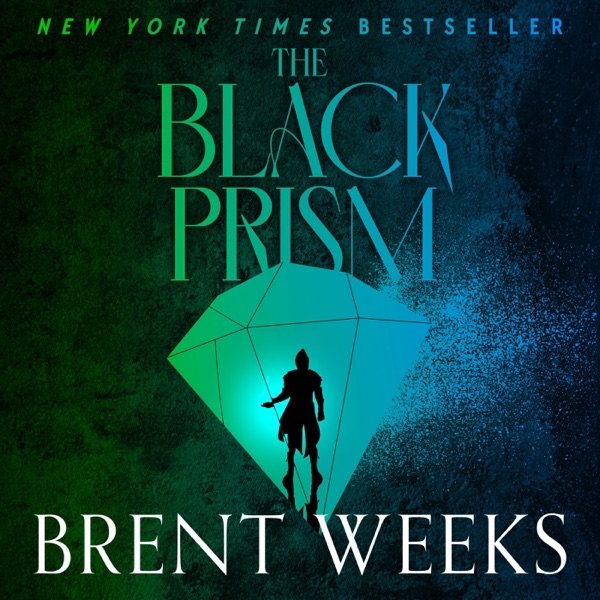
* The System: Chromaturgy. * The Blueprint: Magic is drawn directly from the visible color spectrum. Drafters must have unfiltered sunlight, absorbing specific wavelengths through their eyes to synthesize physical luxin. * The Rules & Costs: Every color has precise physical constants. Blue luxin is crystalline and perfect for edged daggers, but brittle against blunt impact. Yellow luxin is liquid that hardens upon contact with air, acting as hydraulic shock absorbers or luminous armor. Red is volatile, sticky, and combusts upon contact with oxygen. * The Audio Experience: Across the five-volume, 134-hour quintet—anchored by The Black Prism (21h 26m) and The Blinding Knife (24h 14m)—Audie Award-winning legend Simon Vance delivers a career-defining performance. Vance captures both the roguish arrogance of Gavin Guile and the desperate tactical improvisation of the young, overweight Kip. Listening to naval sieges where ships launch cannons firing hardened blue-luxin armor-piercing shells while red drafters spray liquid napalm turns chromatic optics into thundering military cinema.
### B. Reality as Software & Industrial Espionage: Robert Jackson Bennett’s *The Founders Trilogy*
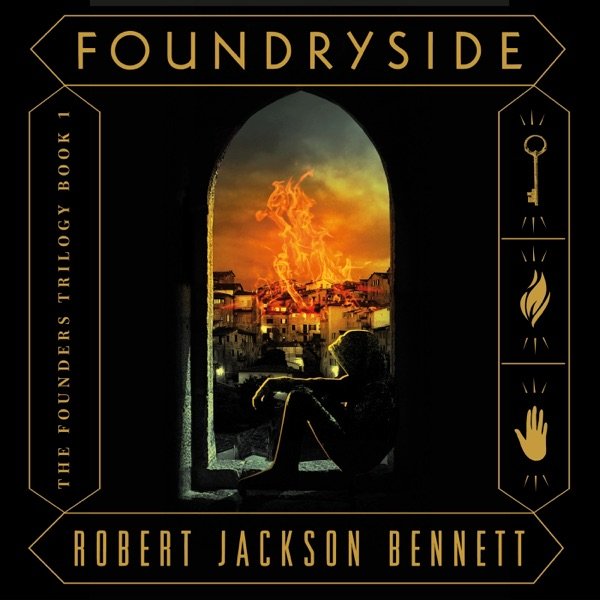
* The System: Scriving. * The Blueprint: The universe was spoken into existence using an ancient, divine syntax. By engraving specific strings of glyphs onto wood, stone, or iron, a "scriver" can rewrite an object’s perception of physical reality. * The Rules & Costs: Objects have no will of their own; they simply believe whatever instruction is etched into them. If you engrave a carriage wheel with the command *"you are perpetually rolling down a ninety-degree decline"*, the wheel generates infinite rotational acceleration on flat ground. If you scrive a heavy iron plate to believe *"gravity pulls you toward the sky"*, it floats. * The Audio Experience: In Foundryside (19h 34m), narrator Tara Sands infuses the story with the kinetic, cynical swagger of an Italian Renaissance cyberpunk heist. When the runaway thief Sancia Grado steals a sentient scrived key named Clef, the magic operates like an open-source hacking exploit. Sands captures the sheer adrenaline of combat where warriors don't cast fireballs—they hack their opponents' armor to believe the air pressure around them is 500 atmospheres.
### C. Power as Pyramidal Exploitation: James Islington’s *The Hierarchy*
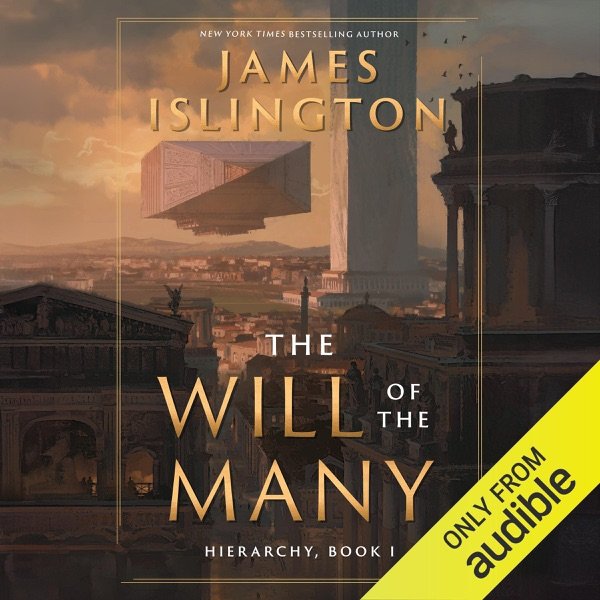
* The System: Catenan Will. * The Blueprint: Magic is an engine of systemic human subjugation. In the Roman-inspired Catenan Republic, society is divided into eight rigid tiers. The lowest caste (Octavs) must cede half of their personal Will—their muscular strength, sensory acuity, and intellectual vitality—upward to their Septim superiors. The Septims funnel that collected pool to the Sexts, and onward up the pyramid to the senators and Princeps. * The Rules & Costs: A Catenan magistrate does not possess magical talent; they possess a human power grid. When a magistrate moves with blur-speed reflexes or deflects an arrow with their bare hand, they are burning through the ceded life-force of hundreds of exhausted, malnourished human beings who are simultaneously collapsing from phantom fatigue in distant tenements. * The Audio Experience: In The Will of the Many (28h 14m) and its monumental sequel The Strength of the Few (31h 10m), British narrator Euan Morton turns this socio-political horror into an unbearable acoustic pressure cooker. Voicing Vis Telimus—an undercover fugitive prince competing in lethal academy trials—Morton brings an icy aristocratic elegance to every confrontation. The magic system isn't just an action mechanic; it is an indictment of empire, where every spell cast on audio is accompanied by the silent, crushing weight of human exploitation.
### D. Spire Mathematics & Enchanter Logic: Andrew Rowe’s *Arcane Ascension*
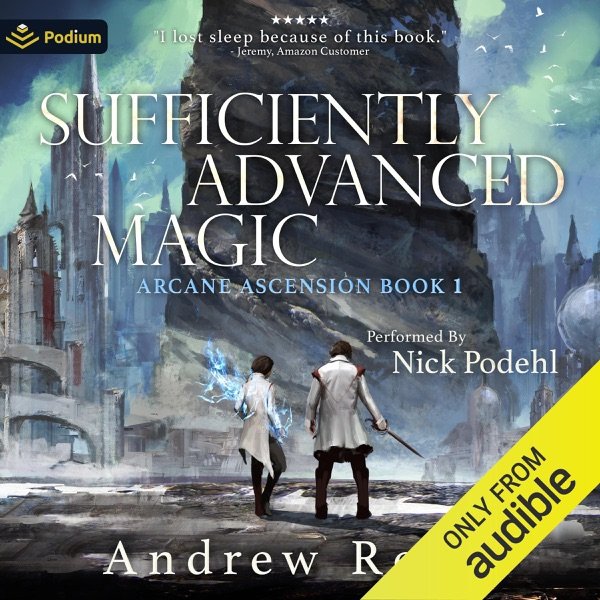
* The System: Attunement Mana & Tactical Progression. * The Blueprint: Deeply influenced by table-top RPG mechanics, game design, and Japanese progression fantasy, Andrew Rowe strips away all mysticism from wizardry. Sorcerers climb colossal, lethal spires to earn "Attunements"—magical marks branded onto specific body locations (mind, heart, hands) that dictate what mana types they can manipulate. * The Rules & Costs: Mana behaves with the exactitude of biological hydration and cellular stamina. Overusing your hand attunement causes severe nerve scarring and paralysis; draining your mind attunement induces temporary hallucinations and cognitive collapse. * The Audio Experience: Beginning with Sufficiently Advanced Magic (21h 58m), voice virtuoso Nick Podehl turns protagonist Corin Cadence’s analytical, neurotic interior monologue into pure comedic and tactical gold. Corin is not a gifted battle mage; he is an Enchanter who wins by building magical capacitors, calculating mana decay rates, and using defensive trigonometry to humiliate over-confident nobles. In Podehl’s expressive, fast-paced narration, calculating spell efficiency feels as gripping as a grandmaster chess match.
---
## 4. The Intellectual Euphoria of the "Third-Act Exploit"
The ultimate reason hard magic audiobooks command such fierce loyalty comes down to a single emotional payoff: The Third-Act Exploit.
In a standard soft-magic story, when the hero is trapped in an impossible dungeon surrounded by an insurmountable army, the emotional tone is one of passive waiting: *Will the wizard arrive? Will a forgotten prophecy activate? Will ancient divine lightning strike?* When deliverance occurs, the listener feels relief—but not agency.
In a hard-magic epic, the entire narrative contract is built on Fair-Play Whodunnit Rules.
Because the author spent the preceding twenty hours demonstrating the immutable laws of conservation, momentum, and chemistry, the listener knows that no magical cavalry is coming to save the day. The protagonist must survive using *only the materials, mana reserves, and physical constraints already established on the table.*
This produces a specific form of intellectual euphoria unique to the genre. Around hour 26 of a marathon listen, as the trap closes and the enemy prepares the final blow, the attentive listener suddenly remembers a throwaway line from hour 7:
> *"Wait... red luxin only ignites when exposed to pure oxygen, and they are standing inside an airtight scrived vault."* > *"Hold on... if he severs the Will-link to the magistrate, the feedback loop travels downward through the pyramid!"* > *"If Sympathy requires equal surface area, the iron nail in his pocket can anchor the entire siege tower!"*
When the protagonist executes that exact deduction three seconds after you piece it together in your headphones, your brain experiences a dopamine explosion. You did not simply witness an author resolve a plot; you solved the equation alongside the hero.
That feeling of earned intellectual triumph cannot be manufactured by vague spells or divine intervention. It requires the relentless, patient architecture of a hard magic system.
---
## 5. Maximizing the Token: The Return on Investment of Deep Listening
There is one final, practical reason why hard magic systems dominate the library of The Long Book Club: Credit Economics.
In the contemporary audiobook landscape, an Audible credit costs between £7.99 and $14.99. Spending that monthly token on a brisk, six-hour thriller that wraps up before your Wednesday evening commute is an expensive luxury.
Hard magic systems are the natural champions of the Credit-Maximizer's Library: * The Worldbuilding Dividend: Because rule-based magic requires extensive world-simulation—showing how magic influences commerce, jurisprudence, architecture, and military doctrine—these books are inherently monumental. * High Re-Listen Value: Once you know the climax and understand the author's hidden exploits, revisiting a 30-hour epic like The Way of Kings or The Will of the Many reveals hundreds of microscopic clues and thermodynamic setups that went unnoticed during your first pass. * Unbeatable Cost-Per-Hour: A 31-hour recording like The Strength of the Few or a 39-hour finale like The Burning White drops your entertainment cost to under 20 pence (25 cents) per hour.
When magic functions with the rigorous logic of physics and code, you don't just buy a story—you buy a masterclass in strategic problem-solving that stays in your head long after the final chapter concludes.
---
## Where to Begin Your Hard Magic Audio Journey
Ready to trade mysterious hand-waving for clockwork tactical brilliance? Explore our curated starting points inside our complete Best Long Hard Magic System Audiobooks collection:
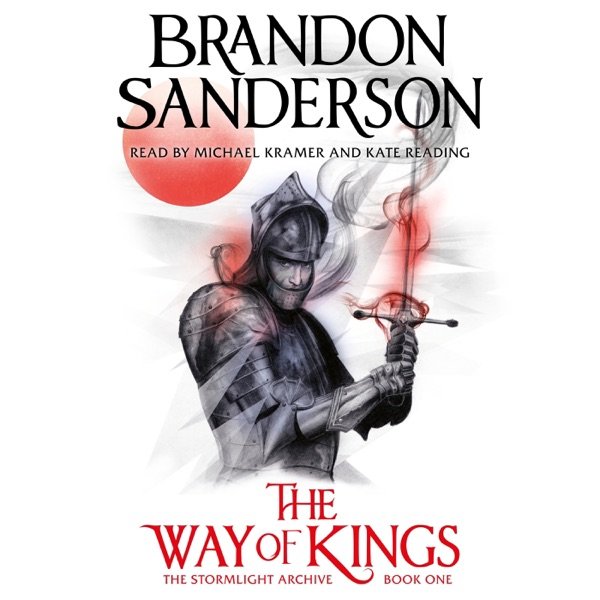
* The Will of the Many by James Islington *(Narrated by Euan Morton)* • 28h 14m * The Magic Specialty: Pyramidal Will extraction, ruthless Roman-coded academy intrigue, and kinetic battery combat. * The Black Prism by Brent Weeks *(Narrated by Simon Vance)* • 21h 26m * The Magic Specialty: Light-refracting drafting, chemical luxin engineering, and deadly optical spectrum poisoning. * Foundryside by Robert Jackson Bennett *(Narrated by Tara Sands)* • 19h 34m * The Magic Specialty: Scriving reality’s operating system to rewrite physical laws of gravity, mass, and kinetic velocity. * Sufficiently Advanced Magic by Andrew Rowe *(Narrated by Nick Podehl)* • 21h 58m * The Magic Specialty: Tactical mana engineering, enchanting attunements, and puzzle-box dungeon spire ascents. * The Way of Kings by Brandon Sanderson *(Narrated by Michael Kramer & Kate Reading)* • 45h 37m * The Magic Specialty: Stormlight-fueled surgebinding kinematics, gravitational lashings, and high-inertia shardplate warfare.
Step into the labyrinth, turn up the volume, and discover why rules don't constrain fantasy—they make it immortal.